
rijumoni
rijumoni chetia gogoi , assam

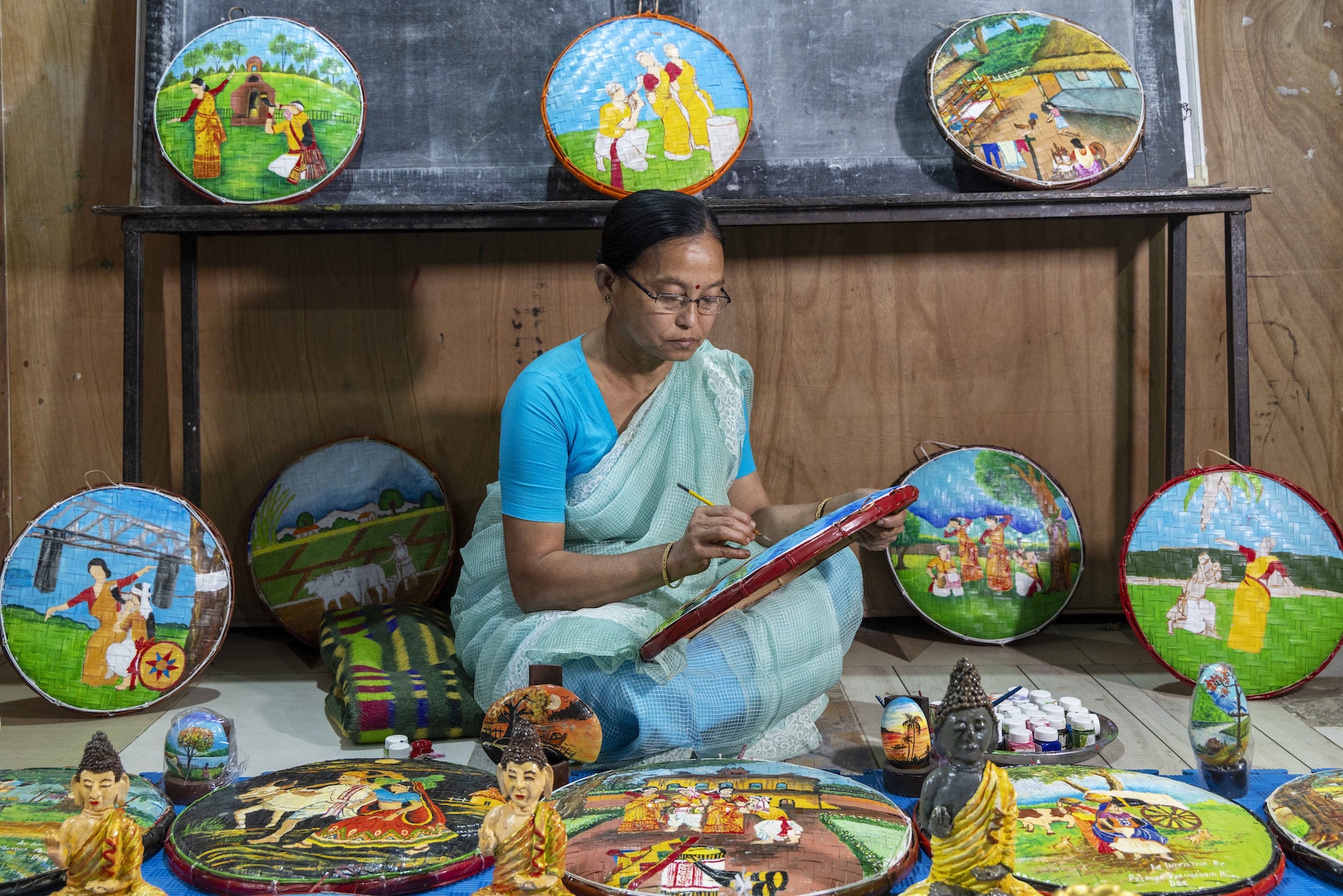
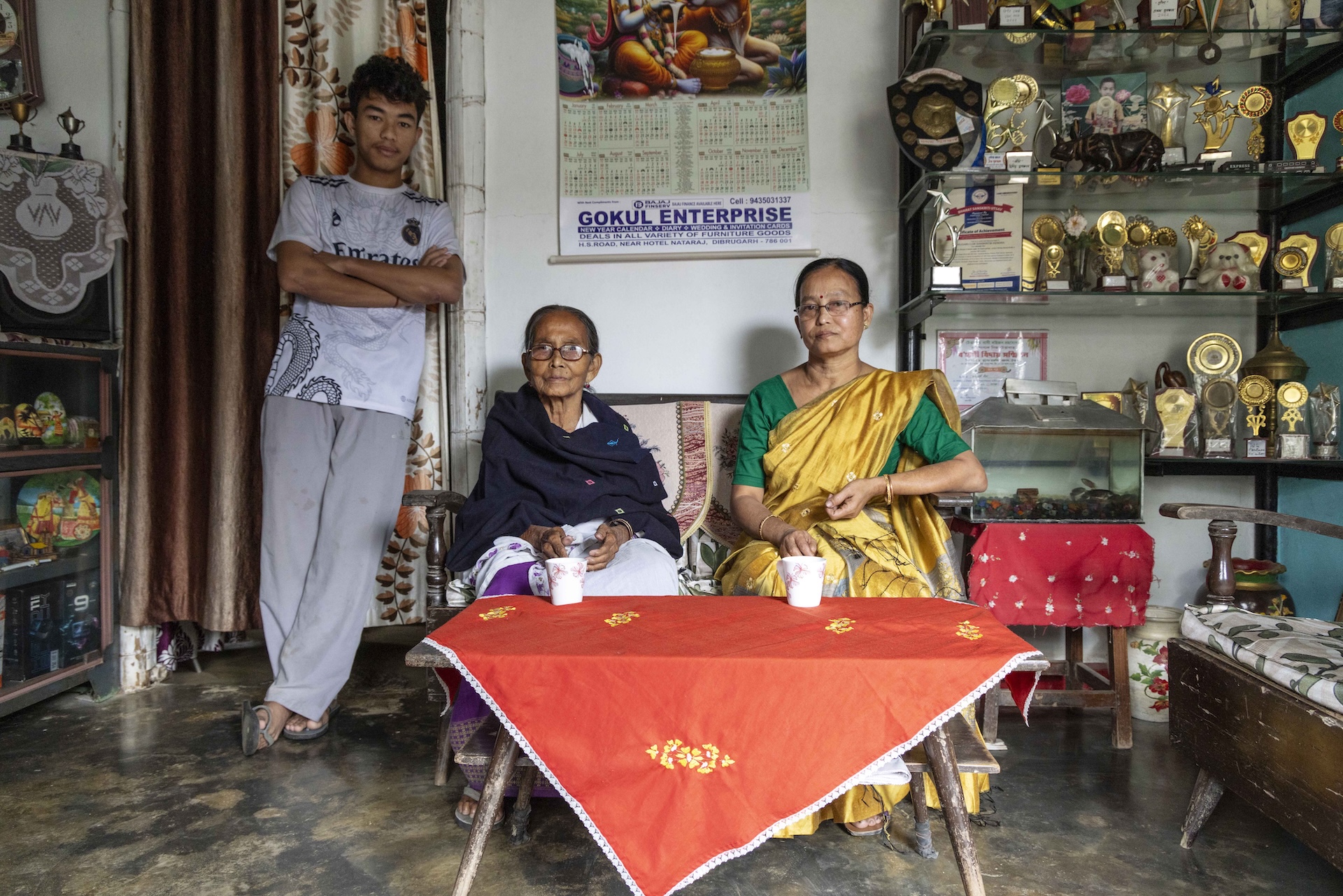

“I have won many prizes in art competitions and I’ve been an art teacher for many years”
Among the three Bihu festivals enthusiastically celebrated across Assam, Bohag Bihu, held in spring, includes competitions featuring spectacular performances that highlight traditional culture. Rupjyoti Gogoi (20) from Dibrugarh has won many tributes for playing the dhol (drum) and pepa (hornpipe) in Bihu competitions. The eyes of his mother Rijumoni Chetia (57) shine with pride when they see his trophies. But her ears have never heard his music.
Rijumoni and her older sister Bijumoni, both born with deafness, are among the five children of Khetradhar Chetia and Binu Prava Hazarika. Binu, now 81, recalls: “We realised at a very young age that they could neither speak nor hear so we took them to an ENT specialist Dr B.R. Das who confirmed their deafness. We faced immense difficulties bringing them up.” Both sisters attended a nearby mainstream school, Nadeshwar Chakravarty High School, but they couldn’t proceed beyond Class 3 because they couldn’t hear or understand their lessons.
When the couple enrolled Rijumoni at Balya Bhavan, she began learning under a reputed art teacher, (Late) Priti Ranjan Das, and this steered the direction her life would take. “I used to accompany her to the classes, four to five days a week,” her youngest brother Bitumoni Chetia remembers. “While she learned art, I spent time playing table tennis and carrom there.” She then worked as an art teacher at Blessing, a school for children with special needs, for nearly 18 years. Later, she worked for a while at a school established by her tutor Priti Ranjan Das, and then came in contact with Jyotsna Sonowal who founded Prerona Pratibandhi in 2001.
Rijumoni joined Prerona in 2002 when it was functioning as a self-help group and had yet to become an NGO. In October that year, the group organised an art exhibition for individuals with disabilities. Rijumoni participated and showcased exceptional artistic skills. But she was also slipping into depression, a fact that Binu shared with Jyotsna. “Rijumoni would often tell her mother she was a burden to the family and it was better to die,” Jyotsna narrated. “Then we heard about a man who had thrown his disabled 12-year-old daughter into the river Brahmaputra. Hearing about such struggles, our group was driven to firmly establish Prerona as an NGO to support individuals like Rijumoni.”
During one of Prerona’s workshops, Rijumoni, in her thirties, met Pabitra Gogoi, who was in his twenties and also had deafness. A mutual affection blossomed, and they eloped. The NGO staff searched for the missing Rijumoni and found her in Pabitra’s house in Barpathar Gaon, dressed as a bride in traditional handwoven clothes, with the village community gathering to solemnise their wedding!
Following the marriage, the NGO helped them set up livelihoods: Rijumoni focussed on handicrafts, while Pabitra was given a sewing machine and helped to open a small shop. Despite their families’ fears that a child born of two Deaf individuals would also have deafness, the couple decided to start a family. Rupjyoti was born with hearing intact. Rijumoni bought a scooter for Pabitra with her personal earnings. The future looked rosy, but it was not to be.
Rupjyoti was barely three when Pabitra met with a fatal road accident. Despite this immense loss, Rijumoni showed incredible resilience. She couldn’t manage to single-handedly bring up her little boy, so she moved back to her parental home and continued her association with Prerona. At Prerona Children Home, which Jyotsna established in 2016 for orphaned and destitute children, Rijumoni earns ₹5,000 a month teaching art and craft. Jyotsna says, “Despite her speech barrier, she and the children understand one another very well.” She wishes the government would provide financial assistance or help set up a sales outlet for independent artists with disabilities.
Among the five siblings, the eldest, Usharani, lives separately with her husband Pronob Rajbonshi, and so does her brother Chandan and his family. Bitumoni, who is single, runs a fast food outlet in the bustling Chowkidinghee intersection and lives with his mother, two sisters and nephew. Bijumoni never married; she earns pin money taking orders for her embroidery work. Rupjyoti is studying in Lahoal College’s Industrial Training Institute and has chosen the Electrical branch. He is also a content creator who enjoys documenting his experiences: in 2025 he and a friend took a month-long bicycle trip to Kedarnath temple, which he counts as “the most memorable and adventurous experience” of his life.
“Since childhood, I have shared a very special bond with my mother,” Rupjyoti says. “I gradually learned to communicate with her through our own unique sign language.” He shares a childhood memory: like all children he loved only the cream in cream biscuits. He used to lick the cream and throw the outer shells outside the house. This happened repeatedly until one day Rijumoni lost her temper. She scolded and hit him for wasting food. “Today, when I look back, the memory feels both emotional and funny,” says Rupjyoti. “It reminds me of my mother’s love and her sense of discipline. The lesson – the value of not wasting – will remain with me throughout my life.”